
What the Rose Hill Village Sale Means for the Station Area
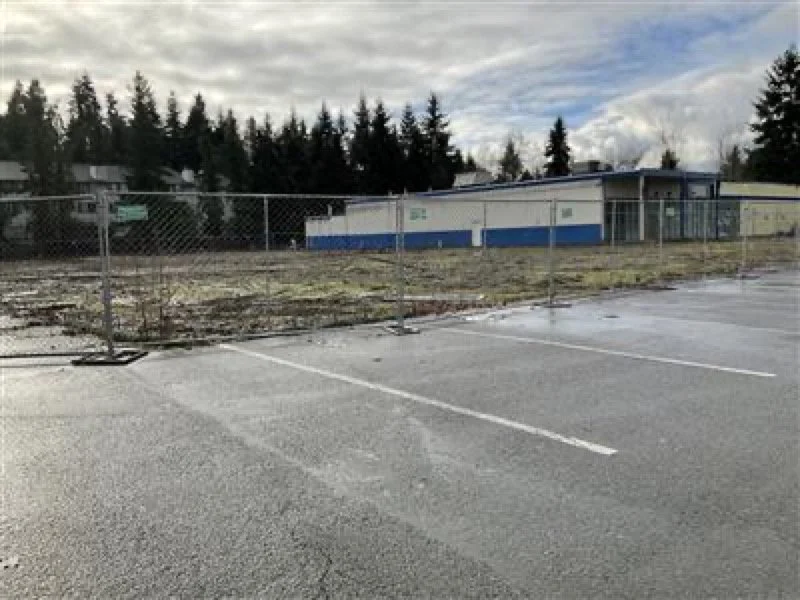
A national homebuilder just paid $27 million for a long vacant Kirkland shopping center and plans to build townhomes. The project is legal because of an exemption the City Council wrote this spring, on its way to banning townhomes almost everywhere else in the NE 85th Street Station Area.
In short:
Taylor Morrison bought the vacant Rose Hill Village shopping center at 12631 NE 85th St for $27 million and plans a townhome project called Rose 85, targeted for completion in late 2027. The plan the city has approved is 89 townhomes.
In May, the council voted 7-0 to prohibit new townhomes across nearly all of the station area, the district it has planned around the I-405 bus rapid transit station.
Rose 85 proceeds under a narrow exemption for projects approved before the ban. The exemption requires a complete building permit application, consistent with the approved plan, within nine months of the ordinance taking effect. That deadline lands in early 2027.
What happened
Rose Hill Village has sat mostly vacant since a 2018 fire damaged or destroyed seven businesses there. MainStreet Property Group bought the 3.42 acre property in early 2022 for $20.5 million and announced a two building office complex totaling 575,000 square feet, described at the time as fully funded and expected to open by 2025. The office market collapsed and none of it was built. MainStreet instead won city design review approval in 2025 for 89 townhomes on the site.
On September 15, King County recorded the sale: Taylor Morrison, a national homebuilder finishing the 60 townhome Senderos project in Kingsgate, paid $27 million. The city issued the demolition permit the day before, covering the center's circa 1960 building and its little coffee stand. Taylor Morrison calls the project Rose 85 and expects to finish it in late 2027. The company told the Puget Sound Business Journal that details like home counts and prices are still being refined.
The council saw this coming
The site sits in the NE 85th Street Station Area, where Kirkland has spent years planning dense, walkable growth around the bus rapid transit station now under construction at I-405, an investment councilmembers have put at roughly $250 million. Earlier planning conversations about this property contemplated an apartment project of up to 600 units. When the proposal became 89 townhomes instead, the council responded.
On May 5, 2026, after debate across two meetings, the council adopted Ordinance O-4936 on a 7-0 vote. It prohibits new detached and attached dwelling units, meaning single family homes and townhomes, in the station area's two main mixed use districts.
The argument for the ban was about capacity. Deputy Mayor Neal Black asked "if not here, then where," reasoning that once a parcel redevelops as townhomes, its capacity for more housing is gone for a generation or two. Councilmember Jay Arnold put the cost of this site's switch from a possible 600 apartments to 89 townhomes at 511 homes "that will need to be placed elsewhere in our city." Mayor Kelli Curtis warned that falling short of the station area's housing goals could make regional agencies less generous with transportation money.
The council rejected a broader amendment that would have kept townhomes legal on about 44% of the station area's land (4-3), and approved a narrower one (5-2, Black and Curtis opposed): townhomes remain allowed on roughly nine parcels along the area's edges, next to single family streets, about 3.7% of the station area. A proposed 2030 sunset on the ban failed 0-7.
Why Rose 85 can still be built
The ordinance contains an exemption written with this project in mind. Staff told the council on May 5 that it was intended for and applicable to the Rose Hill townhome development. A proposal that already had final Design Review Board approval keeps its townhome rights, but only if a fully complete building permit application, consistent with the approved proposal, is filed within nine months of the ordinance taking effect. That deadline lands in early 2027.
That timing is our read of why the project is moving quickly: demolition permitted in September, completion targeted for late 2027. It also means the approved 89 townhome plan is load bearing. The exemption requires the permit application to be consistent with the proposal the Design Review Board approved, so a substantially redesigned project would, in our reading of the ordinance, fall under the ban.
The case against the ban
The prohibition had thoughtful critics, and their argument deserves a fair hearing. Councilmember Jon Pascal relayed what developers told the city: the regulatory environment already sends mixed signals, and each added rule reads as another barrier. Councilmember John Tymczyszyn, who paused the vote for two weeks so amendments could be put in writing, called it counterintuitive to prohibit housing in order to create housing, and noted that the station area's original vision assumed thousands of office workers who, after the shift to remote work, aren't coming. The Planning Commission's own preference was incentives rather than prohibition. And townhomes are ownership housing, a real and scarce thing in Kirkland, as supporters of the ban acknowledged on the dais.
The council majority's answer: the incentives already exist, they weren't working, and the only housing project actually moving in the station area was townhomes. Whether patience or flexibility better serves the station area is the bet the council placed on May 5.
What this means going forward
Rose 85 will likely be the first major redevelopment in the station area, and it's an outlier by design. It got in under the old rules because it was nearly permitted when the council acted, and the council chose to let it finish rather than strand it. Under the new rules, future projects in the heart of the station area must be denser: stacked flats, apartments, mixed use buildings. So a resident driving past the finished townhomes in 2028 will be looking at the exception, not the plan.
The open question is the one the council debated for two meetings without fully resolving. Is holding the line on density follow-through on a long range plan, or a rule the market will simply wait out? The May 5 discussion is where the council wrestled with exactly that, and it's worth any resident's time.
Sources & city records
Last updated: September 2026.
"Taylor Morrison buys vacant Kirkland shopping center," Neetish Basnet, Puget Sound Business Journal, September 16, 2026 (behind a paywall): https://www.bizjournals.com/seattle/news/2026/09/16/taylor-morrison-rose-hill-village-townhomes-sale.html. The sale price, buyer, demolition permit timing, and project timeline come from this article. The 89 townhome figure, the 600 unit comparison, the ordinance details, and all vote counts come from Kirkland's public records below, not from the Business Journal.
Kirkland Zoning Code Chapter 57, the station area form based code as amended
Photo at top: King County Assessor property record for parcel 123310-0680
Want to talk about this with neighbors? Join the Cherish Kirkland Facebook group. It's a private community of Kirkland residents — request to join, answer the membership questions, and an admin will approve you.